Customer story · Manufacturing
From a tariff crisis to an automated pipeline, in four weeks.
When a global tariff crisis hit, a skilled engineering team needed to scale their customs documentation output overnight. An AI extraction tool on Forra was in production in 4 weeks.
The challenge
A tariff crisis revealed a critical process bottleneck.
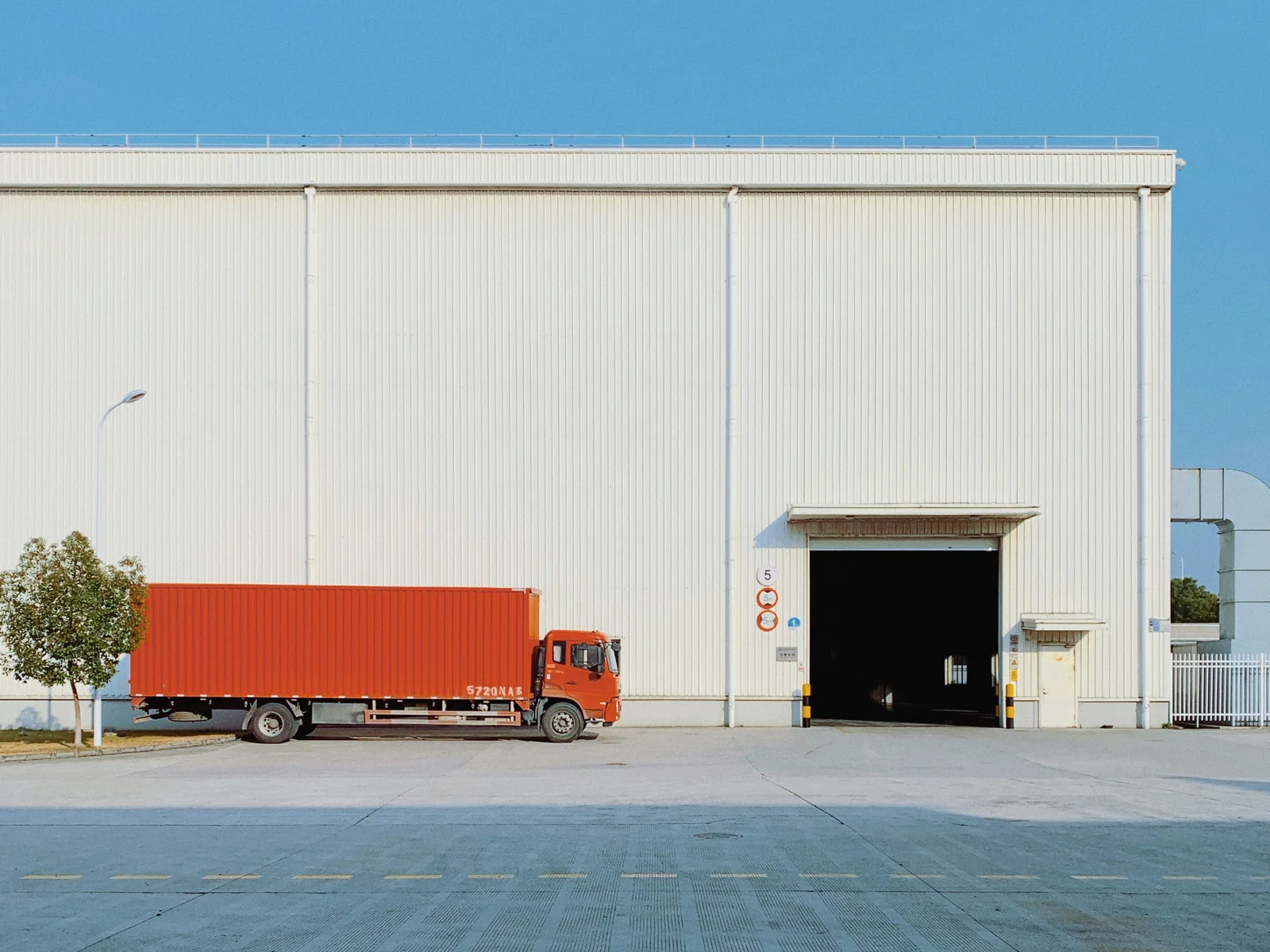
When the global tariff crisis hit, the company’s export operations felt it immediately. Every shipment required accurate customs descriptions for each individual part, pulled from technical plans and manufacturing roadmaps. The engineering team had always handled this work with precision, reading through AutoCAD files, identifying components, and writing customs descriptions with the accuracy the process demands.
But the crisis changed the math. Volume surged beyond what any team could sustain. At peak load, three full-time engineers were redirected from their core engineering work to keep pace with documentation demand. The stakes were high: a wrong customs description means non-compliance, delayed shipments, and costly penalties. Accuracy was never the issue; throughput was.
The solution
The right tool, built on the right platform.
Speed mattered. The team wasn’t dealing with a theoretical inefficiency. They were in the middle of an active operational crisis. The answer couldn’t take six months to build and three months to deploy.
Mirego built the customs extraction tool directly on Forra. Because Forra handles the foundational layer (authentication, deployment, integrations), the team could focus entirely on the problem: parsing complex technical documents and extracting the right data.
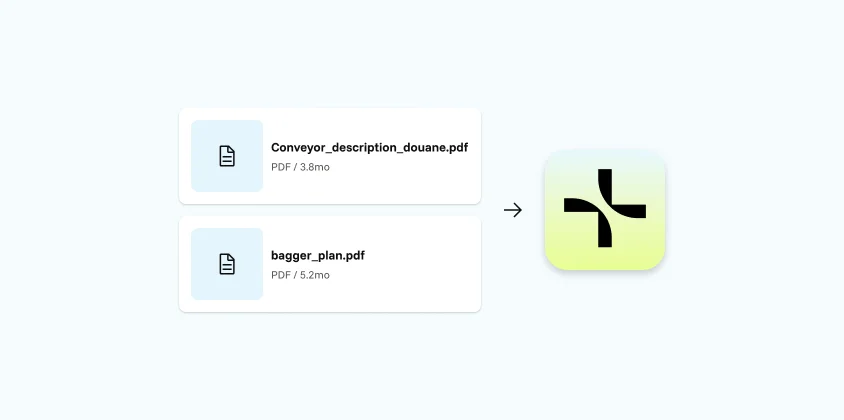
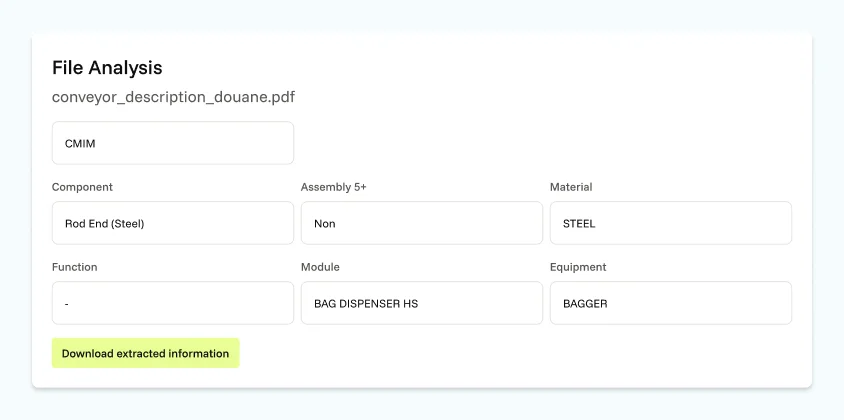
The tool ingests AutoCAD technical plans and manufacturing roadmaps, analyzes their content, and automatically extracts parts information to generate a structured customs description file covering every tariffed component. What previously required engineers to manually cross-reference multiple documents is now handled in a single, consistent pipeline.
Crucially, the engineers stay in the loop where it counts. They review and validate the output rather than generate it from scratch, applying their technical judgment where it matters most. The time savings are real, and the drop in compliance risk is structural.
That’s the value of building on Forra. When the problem is urgent and the stakes are high, the goal is shipping the solution, not spending the runway on infrastructure.
The outcomes
From three engineers to one, in four weeks.
- The team scaled from 3 engineers on documentation to 1, freeing two engineers to return to their core technical work.
- Delivered in 4 weeks because building on Forra eliminated the infrastructure overhead that typically adds months to custom tool development.
- Zero adoption friction: the tool deploys inside Forra’s existing environment, no installation, no custom setup, no onboarding delay.
- Compliance risk significantly reduced through consistent, structured outputs that eliminate manual transcription errors on high-stakes export documents.
- Engineers refocused from documentation to technical validation, applying their judgment where it has the most impact.
- A proof point for the Forra model itself: when a real operational crisis hit, a production-ready AI tool was in engineers' hands in under a month.


Eddyfi’s knowledge base already had the answers. Finding them was the hard part.
Purpose-built AI agents replace a generic assistant, achieving 87.5% accuracy on a validated benchmark versus 12% for Microsoft Copilot.

The power of experience: capturing 30 years of knowledge.
AI transcribes expert interviews, identifies speakers, and turns institutional knowledge into a searchable resource for your entire team.
The answer already existed; reaching it just took 15 hours.
AI research agent searches four scientific libraries simultaneously and delivers a complete, sourced report in minutes instead of hours.