Customer story · Manufacturing
15 to 20 hours per report, down to a few minutes.
A skilled engineering team was producing meticulous technical reports, but each one took 15-20 hours. A 5-step guided workflow on Forra turned field data into official documents in minutes, unlocking 4x throughput.

The challenge
A skilled team, held back by a manual process.
The engineering team is responsible for producing official technical reports (Q-2, r.22) for every septic installation project. Their expertise in soil analysis and system selection is what makes each report reliable. But the process around that expertise was consuming the time: manually entering data into Excel, consulting decision tables, and hand-drafting a 10-page document with 3 accompanying plans.
The result: 15 to 20 hours of work per file. A 4-person team hitting a hard ceiling of 200 reports per year, with the designer acting as the single bottleneck across a fragmented stack of Excel sheets, Pronto forms, and PowerPoint templates. Demand kept growing, but capacity could not follow without a fundamentally different approach.
The solution
A guided workflow, not a chatbot.
The team deployed a dedicated workflow application on Forra. The core philosophy: the engineer validates, the AI handles the mechanical steps.
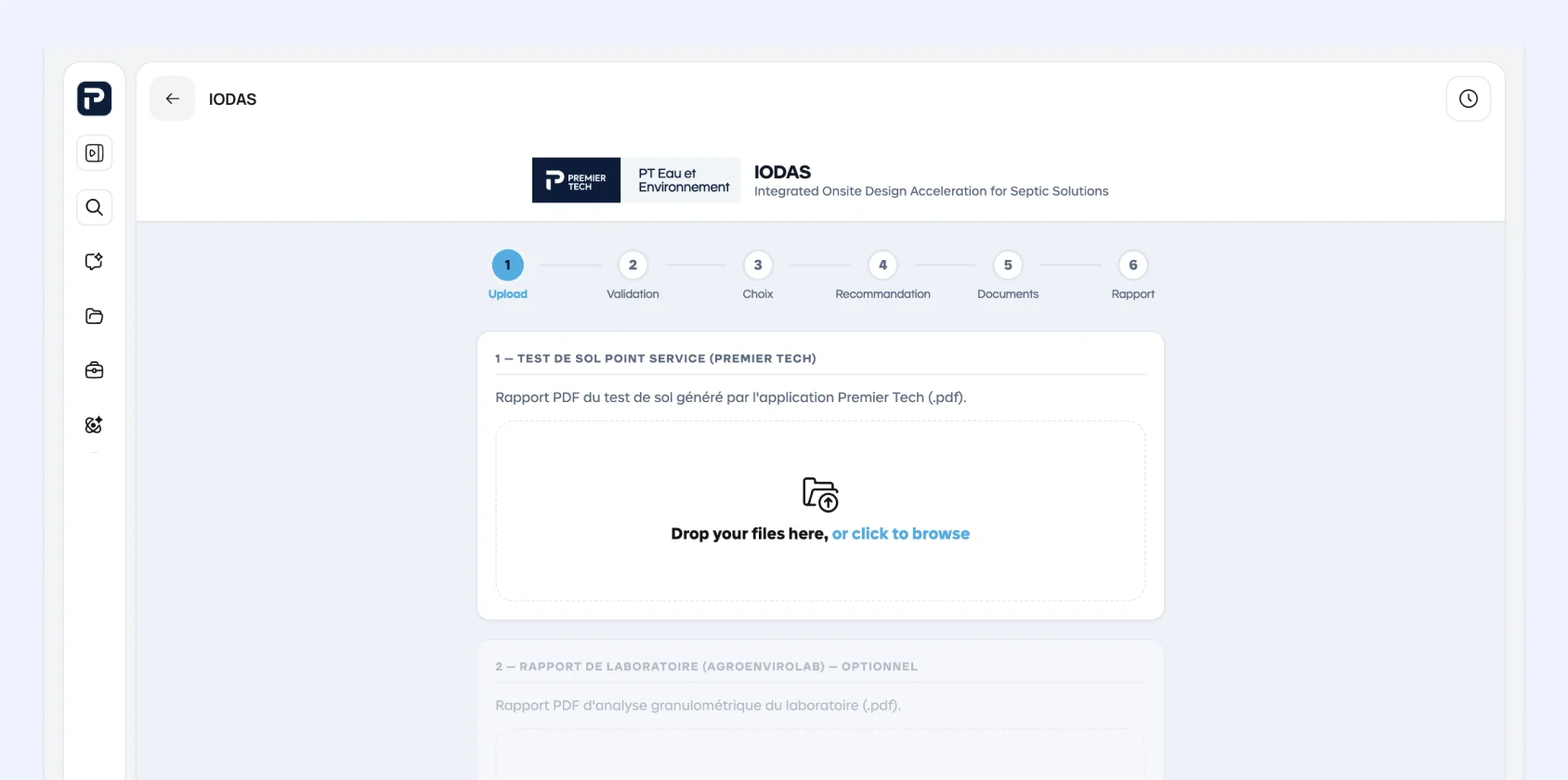
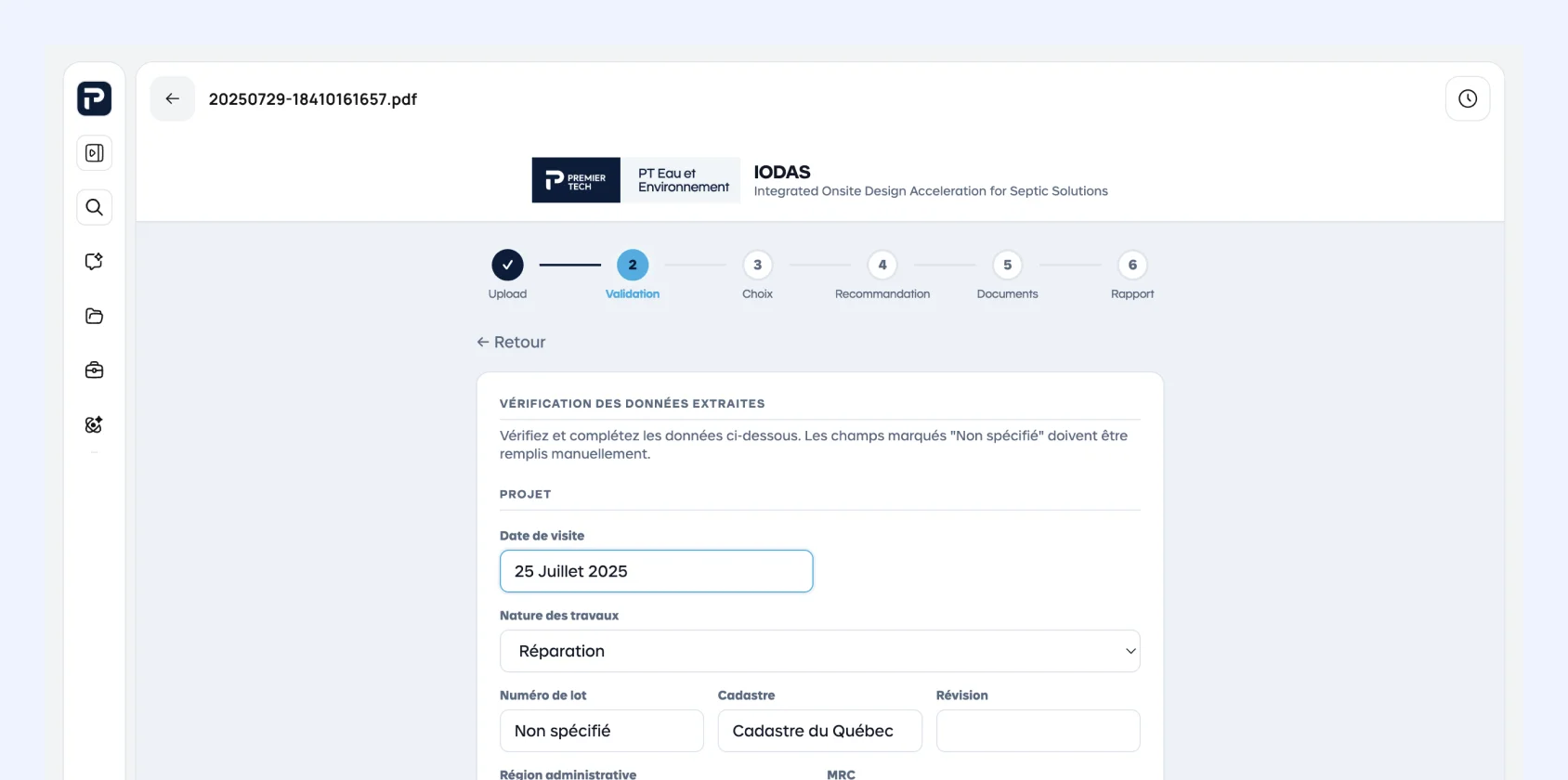
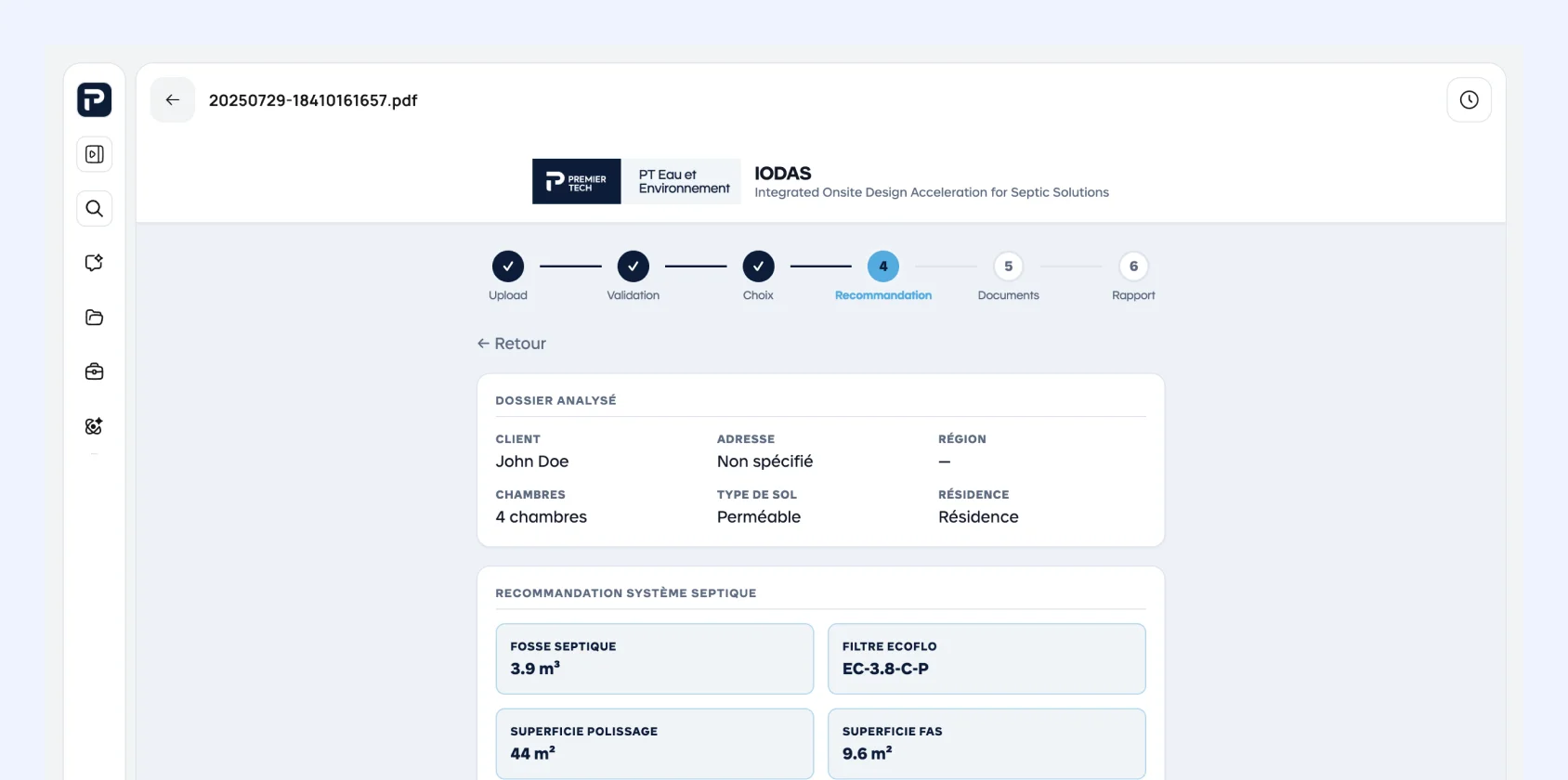
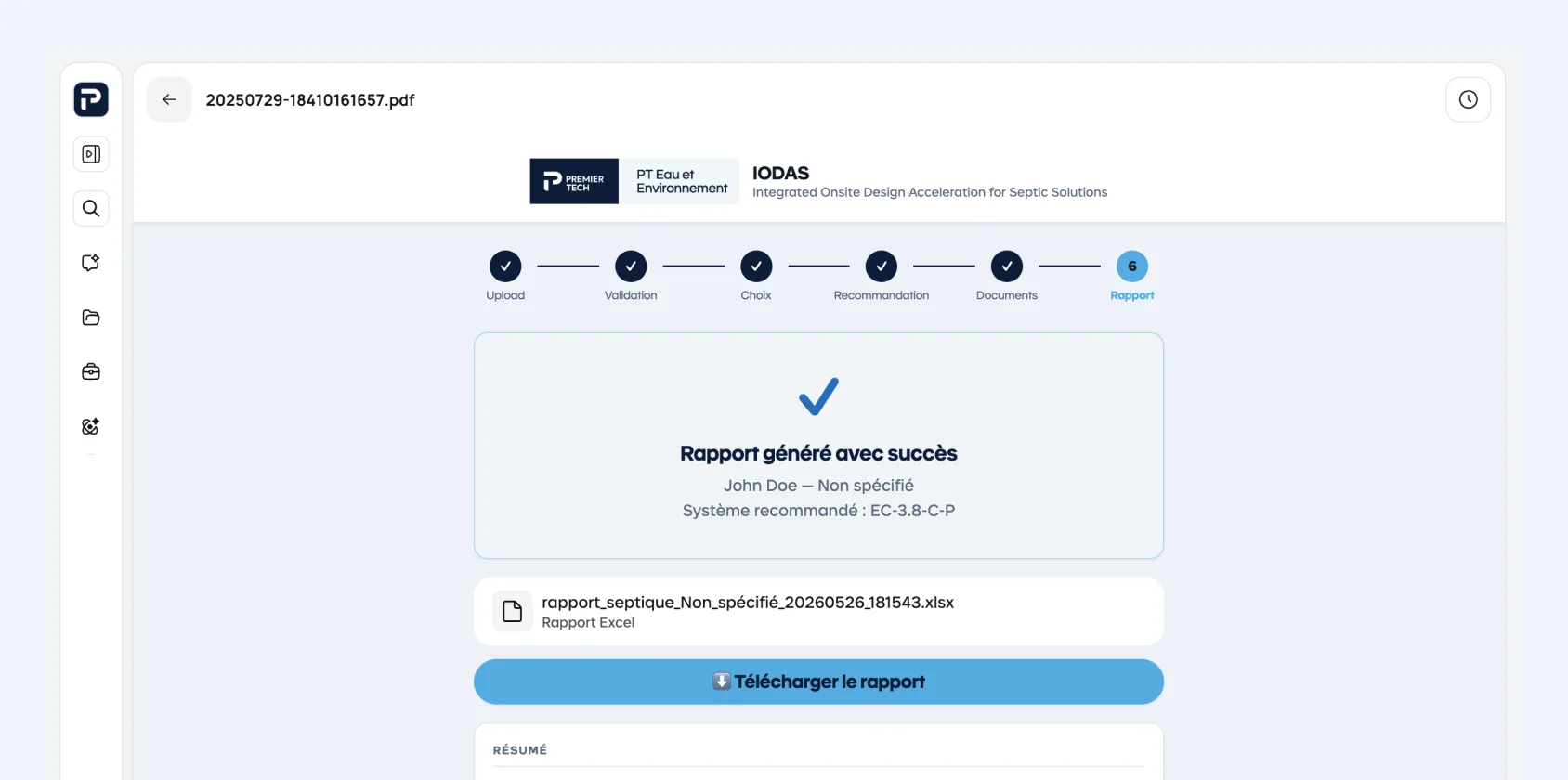
The flow is broken into 5 structured steps that take a technician from raw field data to a downloadable official report:
- Upload: Import the Excel file from field data collection
- Validation: Review and correct the extracted data
- Recommendation: Approve the AI-suggested system model
- Documents: Generate the official report documents
- Report: Download the completed official report
The outcomes
Same rigor, four times the throughput.
- A report that took 15-20 hours now takes a few minutes, end to end.
- The same team can go from 200 to 800 reports per year with one additional team member.
- +$200,000 in revenue potential without increasing headcount proportionally.
- Zero manual transcription of soil analysis data: extraction is fully automated from source files.
- The tool is exportable to other markets (USA, UK, France, Iberia) with minimal adaptation.


Eddyfi’s knowledge base already had the answers. Finding them was the hard part.
Purpose-built AI agents replace a generic assistant, achieving 87.5% accuracy on a validated benchmark versus 12% for Microsoft Copilot.

The power of experience: capturing 30 years of knowledge.
AI transcribes expert interviews, identifies speakers, and turns institutional knowledge into a searchable resource for your entire team.

The answer already existed; reaching it just took 15 hours.
AI research agent searches four scientific libraries simultaneously and delivers a complete, sourced report in minutes instead of hours.